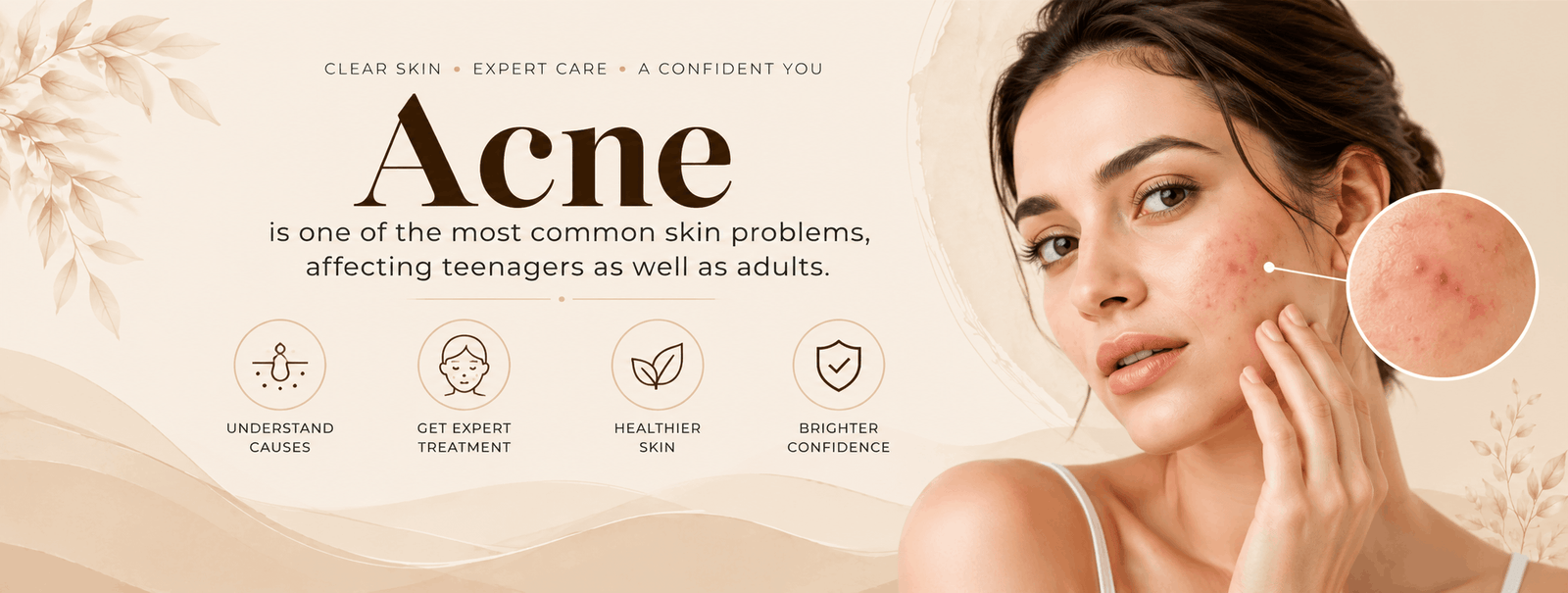
Acne is one of the most common skin problems, affecting teenagers as well as adults.
May manifest as acne, blackheads, whiteheads, red bumps or painful cysts on the face, back, chest and shoulders. Acne doesn't go away for some people. Acne scars, marks and uneven skin texture may result from repeated outbreaks.
The great news is that there is effective acne treatment in Delhi available if you're having trouble getting rid of acne. The first thing is to know what is the cause of your acne and the next is to select your treatment based on your skin type.
If your acne persisting or if you are leaving scars behind it is important that you see a Dermatologist for the correct diagnosis and treatment plan.
What Causes Acne?
Acne occurs when oil, dead skin cells and other debris accumulate in the hair follicles. There are a number of factors that can lead to acne.
Excess Oil Production
Too much sebum production can cause the oil to combine with dead skin cells and block pores, which can lead to pimples and blackheads.
Hormonal Changes
Oily skin can be caused by hormonal changes, which can stimulate oil production, and lead to acne. This occurs normally in puberty, menstruation, during pregnancy and under some hormonal state.
### Bacteria and Inflammation
The blocked pores can allow acne-causing bacteria to cause inflammation, leading to red, painful pimples.
Stress
For some, stress can exacerbate acne. At times of stress, poor sleep and changes in lifestyle may also cause skin problems.
Skincare and Hair Products
Certain heavy or inappropriate skin care, makeup and hair color can also lead to clogged pores, particularly when you have acne prone skin.
How to Pop or Squeeze Pimples
It may be tempting to try to pop a pimple, but squeezing pimples can cause them to become red and inflamed, which could lead to acne marks and scars.
It may be tempting to try to pop a pimple, but squeezing pimples can cause them to become red and inflamed, which could lead to acne marks and scars.
The following are the most frequent acne types:
Acne may present differently in various individuals.
Having an understanding of the type and severity of acne is important because treatment may differ.
The best treatment options for acne.
No single acne treatment is the best for everyone. The treatment should be based on the type of acne, its severity, skin type and age and any underlying causes.
Topical Acne Treatment
If the acne is mild to moderate, a dermatologist might suggest topical medications such as those that contain salicylic acid, azelaic acid, benzoyl peroxide or retinoids.
With proper application these treatments can help to regulate clogged pores, inflammation and fresh breakouts.
Oral Medication
If the acne is moderate or severe, prescription oral medications may be necessary. Depending on the patient, best dermatologist in delhi> might consider antibiotics, hormonal treatment for selected patients, and/or isotretinoin treatment for some severe or persistent acne.
Prescription medicines should be always taken under suitable medical supervision.
Chemical Peels
In some instances, it may be suggested that a professional chemical peel be done for certain acne-prone skin. They can help get rid of clogged pores, excess skin oils, active acne, and uneven skin tone, depending on the type of peel employed.
Acne Scar Treatment
Once the pimple has gone, the acne doesn't disappear either. Others may be left with dark spots, pigmentation or depressed acne scars.
Treatment options for a scar may include chemical peels, laser treatment, microneedling, subcision or a combination of these treatments, depending on the type of scar, which may require the assistance of a skin specialist.
A first step in controlling future scarring is to treat active acne.
The following are some basic guidelines for acne prevention.
In addition to professional treatments, there are a few simple skin care tips that can help to control acne-prone skin.
- Wash face twice a day with a mild cleanser.
- * Avoid harsh scrubbing.
- Avoid squeezing or picking your pimples.
- Invest in appropriate non-comedogenic skin-care and cosmetics.
- * Use sunscreen regularly.
- Avoid using too many products or changing your skin care routine.
- Don't play with acne products.
- Avoid getting hair onto your face if possible, avoid oily hair products on your face.
Don't confuse more skin care products with better skin. Sometimes, it's better to have a simple routine.
When to seek the attention of a dermatologist for acne?
If your acne is persistent, painful, severe, recurring or causing dark marks and scars you should consult your Dermatologist.
Consultation with a professional is particularly helpful when:
- Acne is not getting better despite regular skin care.
- You have deep or painful pimples.
- Scars are left behind by acne.
- Struggling with acne is impacting your self-esteem.
- All of a sudden you get acne as an adult.
- You experience regular acne breakouts around your jawline or another part of your body.
A dermatologist will be able to assess your skin, determine your type of acne, diagnose any potential triggers, and suggest a plan of action for treating acne.
If you're searching for Acne Treatment in Delhi, you're in the right place.
Don't go for a treatment that is trendy online; if you're looking for an acne treatment in Delhi, search for acne doctor in Delhi or a skin clinic for acne in Delhi.
The key to the right approach is to learn about your skin.
Your acne treatment plan might involve:
This method is useful in treating existing spots and in preventing future ones and the scars that will occur.
Frequently Asked Questions
So, what are the best treatments for acne?
Treatment will vary based on the nature and severity of acne. Depending on what you have, a dermatologist can recommend a topical medicine, oral treatment, procedure or a combination.
Is there a way to treat acne scars?
Yes. Depending on the type of acne scarring, treatments like microneedling, chemical peels, lasers or subcision may be recommended.
Should I pop pimples?
Try not to pop acne as doing so will worsen inflammation and also may improve the chance of acne marks and scars.
What is the duration of acne treatment?
The result varies according to the severity of acne and treatment used. It's important to be consistent and sometimes it takes weeks or more of acne treatment before there's a noticeable improvement.
